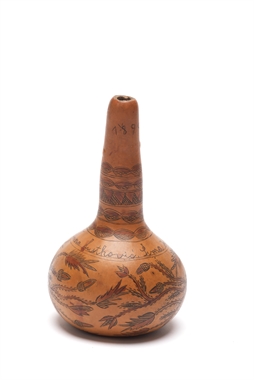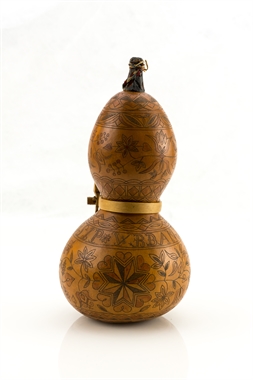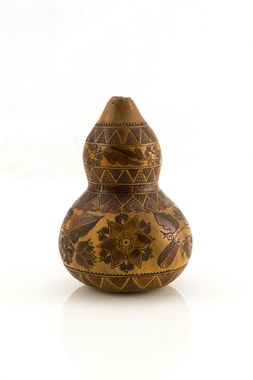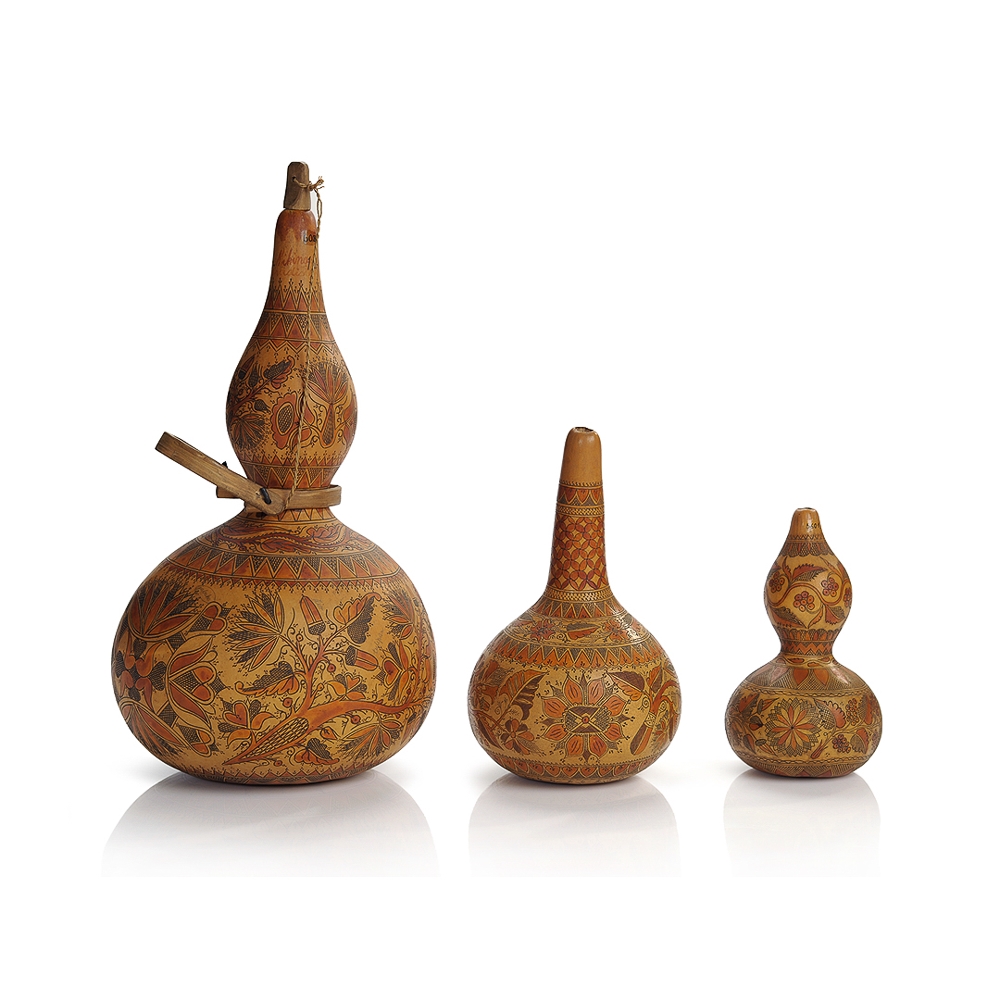
The Collection of Patterned Gourds includes 745 objects – patterned gourds and tools for their decoration, created from the beginning of the 19th century to the present day. Patterned gourds are part of the initial holdings and the history of the founding of the Ethnographic Museum, as evidenced by the earliest dated specimens taken from the Croatian National Museum (the oldest gourd has engraved the year 1805), the Museum of Arts and Crafts, the Trade and Crafts Museum and private collections. Over time, the Collection has been replenished by special or occasional acquisitions and gifts. Various types of gourds, cleaned of seeds and with dried peel, were used in many parts of Croatia, as well as in other environments and cultures, mainly as containers for water or drinks, but in the Northeastern Croatia - the regions of Županja, Đakovo, Vinkovci and Slavonski Brod, a more or less continuous tradition of decorating gourds with carving and painting has been recorded. Based on the Museum acquisitions, it can be concluded that the decoration of gourds was most developed in the region of Županja, where the village of Gradište stands out. Today, the art of decorating pumpkins in the region of Slavonia is on the List of the Croatian Intangible Cultural Heritage.
We use cookies to track visits to our pages (Google Analytics) for the purpose of improving the pages. The statistics are collected anonymously, and by accepting, you agree to the use of cookies. Find out more